Source Long Life Thrust Ball Bearing for Machine Tools, Lifts, and Jacks
Find and compare 28 long life thrust ball bearing options for machine tools, jacks, and lifting equipment. These GCr15 steel bearings handle pure axial loads with P0 to P5 precision grades, offering customizable shaft diameters and interchangeability with other brands for reliable industrial performance.
Key considerations
Products List



Comprehensive Sourcing Guide
Long Life Thrust Ball Bearing Sourcing Guide
Product Scope and Observed Listing Signals
The market for long life thrust ball bearings is characterized by a wide variance in product specifications, with observed listing prices ranging from $0.10 to $1,000 USD and minimum order quantities (MOQs) spanning from 1 to 2,000 units. This broad spectrum indicates that suppliers cater to both prototype buyers seeking single-unit samples and industrial procurement teams requiring bulk volumes for machine tool or lifting equipment applications. Buyers must recognize that the term "long life" is often a marketing descriptor rather than a guaranteed performance metric; therefore, the actual durability depends heavily on the specific material grade, precision class, and load conditions selected. The presence of customizable options, such as bearing numbers and shaft diameters, suggests that many manufacturers operate as flexible job shops capable of producing non-standard sizes alongside standard series components.
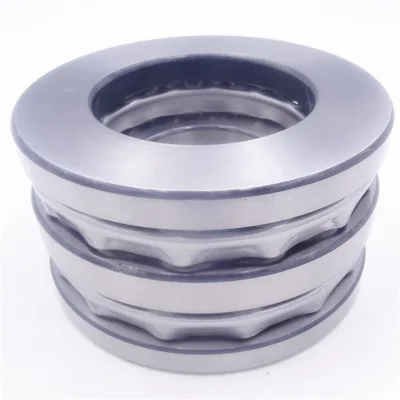
Observed listing signals reveal a strong emphasis on interchangeability and standardization, with many suppliers offering bearings that replace other brands within the 51100, 51200, 51300, and 51400 series. These series are designed for pure axial loads and typically feature a contact angle of 15 degrees, making them suitable for applications where radial loads are minimal or absent. The listings frequently highlight the use of Gcr15 bearing steel, a high-carbon chromium steel known for its hardness and wear resistance, which is a critical factor in achieving extended service life. Additionally, the availability of open seals and stamped steel cages points to designs optimized for high-speed operation and easy maintenance, while the separated construction allows for easier installation and inspection of individual components.
Technical Specifications to Verify
Precision grade is a primary determinant of bearing performance and longevity, with available options typically including P0, P6, and P5 classes. P0 represents the standard tolerance grade, suitable for general industrial applications, while P6 and P5 offer tighter tolerances for higher-speed or more precise machinery, such as machine tools. Buyers must verify the specific precision class required for their application, as higher precision grades often correlate with longer operational life due to reduced friction and heat generation. The material composition is equally critical; Gcr15 bearing steel is the industry standard for these components, providing the necessary hardness to withstand pure axial loads. It is essential to confirm that the supplier uses genuine Gcr15 steel rather than inferior substitutes, as material integrity directly impacts the bearing's resistance to fatigue and wear over time.
Dimensional accuracy and model selection are vital for ensuring proper fit and function within the assembly. The bearings are available in a wide range of models, including 51100, 51104, 51122, 51219, 51311, 51318, and 51430, among others, each with specific inner and outer ring dimensions. For instance, some listings specify standard sizes such as 10×24×9mm or 50×78×22mm, while others offer customizable shaft diameters to meet unique design requirements. Buyers should carefully cross-reference the model number with the required shaft diameter and housing dimensions to avoid installation issues. Furthermore, the cage type, typically stamped steel, should be verified for compatibility with the operating speed and load conditions, as the cage design influences the bearing's ability to maintain ball separation and lubrication distribution during high-speed rotation.
Compliance and Safety Documentation
While specific certification statuses may vary by supplier, buyers should request documentation confirming adherence to international standards such as ISO and GB/T301. These standards govern the dimensional tolerances, material properties, and performance criteria for thrust ball bearings, ensuring that the components meet minimum quality and safety requirements. Compliance with ISO standards is particularly important for buyers operating in regulated industries or exporting to markets with strict quality control measures. Additionally, suppliers may provide REACH compliance documentation, which is relevant for products entering the European market and ensures that the materials used do not contain restricted substances. Buyers should verify that the supplier can provide up-to-date certificates of conformity and material test reports to substantiate these claims.
Safety and operational documentation should also include clear guidelines on load limits and installation procedures. Since thrust ball bearings are designed for pure axial loads, buyers must ensure that their application does not introduce significant radial forces, which could lead to premature failure. The non-aligning nature of these bearings means that precise alignment during installation is crucial to prevent uneven wear and stress concentrations. Suppliers should provide detailed installation manuals or technical support to assist buyers in achieving proper alignment and lubrication. Furthermore, buyers should inquire about the supplier's quality control processes, including any in-house testing for hardness, dimensional accuracy, and rotational smoothness, to ensure that the bearings meet the specified performance criteria before shipment.
Cost Drivers and Commercial Terms
The cost of thrust ball bearings is influenced by several factors, including the precision grade, material quality, and order volume. Higher precision grades such as P5 command a premium due to the tighter manufacturing tolerances and more rigorous quality control processes involved. Similarly, the use of high-grade Gcr15 steel and specialized heat treatment processes can increase production costs but result in longer-lasting components. Buyers should consider the total cost of ownership rather than just the unit price, as higher-quality bearings may reduce downtime and maintenance costs over the long term. The observed price range of $0.10 to $1,000 USD reflects this variability, with lower prices typically corresponding to standard P0 grade bearings in bulk quantities, while higher prices may apply to custom-sized or high-precision models.
Commercial terms such as MOQ, packaging, and lead times also play a significant role in procurement decisions. MOQs ranging from 1 to 2,000 units allow for flexibility, enabling buyers to start with small orders for testing before committing to larger volumes. Packaging options vary from standard carton boxes to wooden cases and color boxes, with some suppliers offering customized packaging to meet specific logistical or branding requirements. Buyers should clarify the packaging details to ensure that the bearings are protected during transit, especially for high-precision components that are sensitive to shock and vibration. Additionally, lead times should be confirmed, as custom orders or high-precision bearings may require longer production periods. Understanding these commercial terms helps buyers plan their inventory and production schedules more effectively.
Supplier Qualification and Quality Control
Supplier qualification is a critical step in ensuring the reliability and consistency of thrust ball bearing supplies. Buyers should evaluate suppliers based on their manufacturing capabilities, quality management systems, and track record in the industry. Suppliers located in Suzhou, China, often benefit from a robust industrial ecosystem and access to high-quality raw materials, but buyers should still conduct due diligence to verify their production standards. It is advisable to request samples for testing before placing large orders, allowing buyers to assess the bearing's dimensional accuracy, material hardness, and operational performance. Suppliers that offer interchangeable parts and customizable options demonstrate flexibility and technical expertise, which are valuable traits for long-term partnerships.
Quality control processes should be transparent and well-documented. Buyers should inquire about the supplier's inspection procedures, including incoming material checks, in-process inspections, and final product testing. Suppliers that adhere to ISO standards typically have established quality control protocols, but buyers should verify that these protocols are consistently applied. Additionally, buyers should consider the supplier's ability to provide traceability for each batch of bearings, including material certificates and test reports. This level of transparency helps buyers identify and address any quality issues promptly, minimizing the risk of production disruptions. Suppliers that offer standard or customized packaging and export packing services also demonstrate a commitment to protecting their products during transit, which is an important aspect of overall quality assurance.
Long-Term Procurement Checks
Long-term procurement success depends on establishing a reliable supply chain and maintaining consistent quality standards. Buyers should conduct periodic audits or reviews of their suppliers to ensure that they continue to meet the required specifications and performance criteria. This includes verifying that the suppliers maintain their ISO compliance and quality control processes over time. Regular communication with suppliers can help identify potential issues early, such as changes in material sourcing or manufacturing processes, allowing buyers to take corrective action before they impact production. Additionally, buyers should monitor market trends and technological advancements in bearing technology to ensure that their procurement strategies remain competitive and aligned with industry best practices.
Performance monitoring of the installed bearings is also essential for long-term procurement success. Buyers should track key performance indicators such as bearing lifespan, failure rates, and maintenance frequency to assess the effectiveness of their current suppliers and products. If performance issues arise, buyers should work with their suppliers to investigate the root causes and implement corrective measures. This collaborative approach helps build a stronger partnership and ensures that both parties are committed to continuous improvement. Furthermore, buyers should consider diversifying their supplier base to mitigate risks associated with supply chain disruptions or quality inconsistencies. By maintaining a proactive and data-driven approach to procurement, buyers can ensure a steady supply of high-quality thrust ball bearings that support their operational goals.
FAQs
What is the main load type for this thrust ball bearing?
This bearing is designed to handle pure axial loads only. It belongs to the 51100 series and features a single or double direction thrust ball design. It is not suitable for radial loads, making it ideal for applications like machine tools, jacks, and lifting equipment where vertical force is primary.
Which precision grades are available for these bearings?
Available precision grades include P0, P6, and P5. These classes ensure varying levels of rotational accuracy and running smoothness. The bearings are manufactured from Gcr15 bearing steel, providing durability and consistent performance across different industrial applications requiring specific tolerance levels for machinery operation.
Can I customize the packaging for bulk orders?
Yes, customization is available for packaging. Options include wooden cases, carton boxes, paper boxes, color boxes, or standard export packing. You can choose standard specifications or request customized packaging solutions to meet specific logistics or branding requirements for your supply chain needs.
What is the contact angle of this thrust bearing?
The contact angle is 15 degrees. This specific angle optimizes the bearing for pure axial load applications. It ensures efficient force transmission within the housing and shaft assembly. The non-aligning design requires precise mounting to maintain performance and prevent premature wear during operation.
Are these bearings interchangeable with other brands?
Yes, these bearings are interchangeable and can replace other brands. They follow ISO and GB/T301 standards, ensuring compatibility with standard dimensions. Models like 51100, 51200, and 51300 series are widely available, allowing for easy substitution in existing machinery without requiring design modifications.
Where are these bearings manufactured?
These bearings are manufactured in China, specifically in Suzhou. The production facility adheres to international standards to ensure quality. The origin allows for competitive pricing and reliable supply chain logistics for buyers in Europe, North America, South America, and Asia seeking cost-effective industrial components.